Showing posts with label Le Quesnoy 1918. Show all posts

Wednesday, April 20, 2022

Remembering those whose lives were shaped by war

The approach of Anzac Day signals a time to remember the millions of people who were affected by twentieth-century wars, and those whose lives and lands are still ravaged by invasion and civil conflict. 

Oratia Books has a firm commitment to telling the stories of New Zealanders at war, not to glorify the events but better to understand and learn from the experience. 

Children's books such as When Dad Came Home touchingly retell the effects of post-traumatic stress disorder on returning soldiers, and the role of family love in healing. 
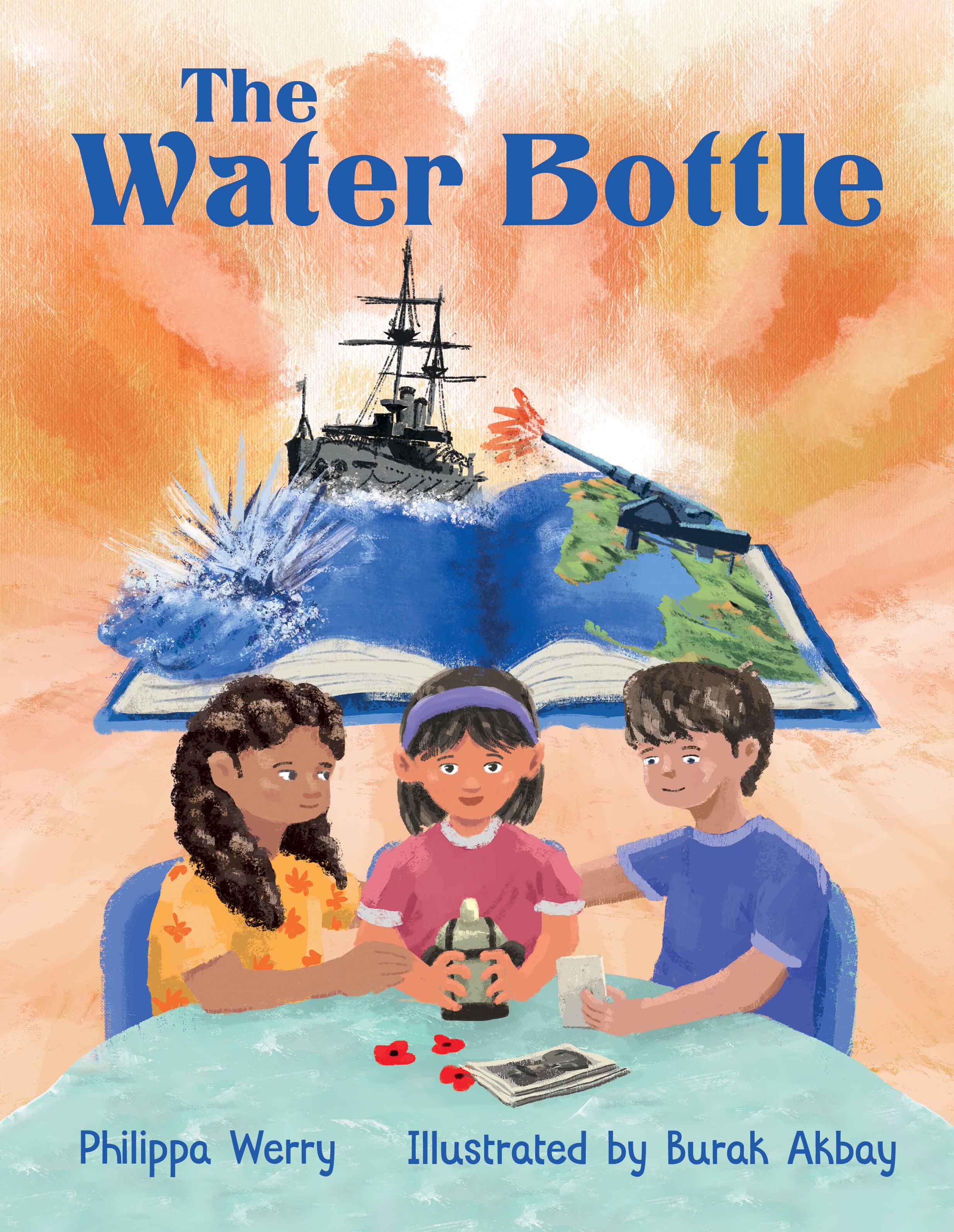

Creating reconciliation and friendship from the shared experienced of Gallipoli is the theme  of our latest children's book, The Water Bottle, a collaboration between Kiwi author Philippa Werry and Turkish illustrator Burak Akbay.


For older readers, the most recent of Christopher Pugsley's masterful works of military history narrates New Zealand's last battle of the First World War as it happens. Le Quesnoy 1918 is an on-the-ground account of this daring capture of the French town of Le Quesnoy, vividly relating the realities of warfare. 


A valuable companion to Pugsley's new edition of Gallipoli: The New Zealand Story, Matthew Wright's The New Zealand Experience at Gallipoli and the Western Front analyses what it was like for New Zealand soldiers at the two main battle fronts where they fought, and frames it with the social effects back home.

We will remember them this 25 April. 

For more reading, check the Oratia Books website.

Thursday, April 23, 2020

Le Quesnoy authority and author Christopher Pugsley features on TV3 this Anzac Day

The taking of Le Quesnoy by Kiwi troops in the dying days of the First World War will feature in a new documentary on TV3 on Anzac Day.

Author Christopher Pugsley features in the documentary, to screen at 7.30 a.m. this Saturday 25 April (and from 8.30 a.m. on TV3+1).


Pugsley's dynamic book on the taking of the French town, Le Quesnoy 1918, was published in an updated edition in March.

Anzac Day celebrations this year have been severely curtailed by restrictions in place to limit the spread of Covid-19.

Broadcast and online coverage will therefore be ever more vital. 

Christopher has offered his reflections on the Anzac Day in a time of pandemic in the Auckland Museum's Online Cenotaph


Christopher Pugsley
Fortunately, online book sales will resume from 28 April, so our distributors PDL can ship out orders made via your local bookseller; check here for a list of independent bookstores.

Wednesday, March 18, 2020

Keeping the history of Le Quesnoy up to date


Since its publication in October 2018, Christopher Pugsley's Le Quesnoy 1918 has shared with thousands of readers the gripping story of how The New Zealand Division broke through German defensive lines to capture the French town of Le Quesnoy in its last and most successful action in the First World War. 

Among those readers have been many descendants of soldiers involved in the action, some of whom contacted the author to provide further commentary about their family members. 

With the information that has come to light, Christopher has been able to update a number of details — notably   the addition of two names to the list of casualties in the period 1–7 November 1918 or who died after from wounds sustained. 

They were Lance-Corporate David MacKay of the New Zealand Rifle Brigade and Private Roy Walker of the New Zealand Cyclist Battalion, both young men in their twenties who were killed on 1 November 1918.


The new entries for those who lost their lives during the Le Quesnoy ation
That takes the total of the New Zealanders who died liberating Le Quesnoy to 191, and the book is dedicated to ensuring they are not forgotten.

Le Quesnoy 1918 now has a new red colour to its cover, marking this updated edition that is out today, just over a month ahead of Anzac Day commemorations.


Dr Christopher Pugsley is one of New Zealand’s leading historians. A retired Lieutenant-Colonel in the New Zealand Army, he was a lecturer in military studies in New Zealand, Australia and UK until his retirement in 2012. His other books with Oratia include The Camera in the Crowd and Gallipoli: The New Zealand Story


Updated edition publishing today, 18 March 2020  |  ISBN: 978-0-947506-49-0  |  RRP $39.99
Paperback, 297 x 210 mm portrait, 168 pages (8 pages colour)

Friday, November 9, 2018

Vanessa Hatley-Owen talks When Dad Came Home to local media

A fine profile of debut author Vanessa Hatley-Owen appeared in the Howick and Pakuranga Times yesterday (also in the Botany and Ormiston Times).


The article explores the genesis of  When Dad Came Home:

Some wounds are not visible. For some returned soldiers the battles continued long after the guns fell silent.
Those were the thoughts that were running in Vanessa Hatley-Owen’s mind as she attended an author talk about the effects of First World War.
For someone who has always been a history buff, it didn’t take long for Vanessa to weave the idea into a children’s picture story book.
So what happens after the soldiers return from war? She postulated and went on to write a gripping book for children at a weekend retreat for writers.

Just how hard it was for men to readjust after life in the trenches hit home to me reading a quote in Oratia's other book that marks the end of the First World War — Christopher Pugsley's tribute to the last major action of the war, Le Quesnoy 1918:

On 3 February 1919 Fred Cody writes from Germany at what is the start of his journey home. 
Been away so long that everything about home is a little blurred, but I suppose a man will settle down in time. 

Some men did settle down in time, as the father in When Dad Came Home finally manages with the love of his family. For others, the war never ended.


Friday, November 2, 2018

Le Quesnoy 1918 in this week's Listener and on Sunday Morning

The battle of Le Quesnoy is the subject of an impressive 7-page feature article by our author Christopher Pugsley in the  3 –9 November edition of the New Zealand Listener.


Drawing heavily on text and imagery from Pugsley's new book, Le Quesnoy 1918: New Zealand's last battle, the feature explores the legacy of the New Zealand Division's contribution on the Western Front and the enduring bonds forged with the people of Le Quesnoy (pronounced Le Ken-wah). 

The Listener's blurb about Christopher Pugsley's article
The article is now live on the Noted website.

Author Christopher Pugsley also featured on Radio New Zealand's Sunday Morning programme on 4 November, in a gripping interview with Wallace Chapman.

Click here to listen in.

Wednesday, October 24, 2018

Brought to life: New Zealand's pivotal last battle of the First World War


The New Zealand Division’s capture of the French town of Le Quesnoy was its last and most successful action in the First World War. 


An authoritative new book on the campaign will be launched in Le Quesnoy on 4 November as part of the inauguration of a New Zealand Memorial Museum — 100 years on from those desperate days. 

The book is on sale in New Zealand from 25 October. 


In an action that made the front page of the New York Times, Kiwi troops scaled the town walls by ladder and overwhelmed the defenders, freeing Le Quesnoy from years of German occupation. 

Drawing on his detailed knowledge of the landscape and those involved, distinguished military historian Christopher Pugsley puts together the story with his mastery of drama — while paying tribute to the New Zealanders who died (and whose details are fully recorded here for the first time). 

Richly illustrated with maps, photographs and paintings of the battle by George Butler, Le Quesnoy 1918 is a passionate account of how the Great War ended.

The battle and the book will be the subject of a major feature in the Listener magazine, to be published this Friday. 

Dr Christopher Pugsley is one of New Zealand’s leading historians. A retired Lieutenant-Colonel in the New Zealand Army, he was a lecturer in military studies in New Zealand, Australia and UK until his retirement in 2012. His first book, Gallipoli: The New Zealand Story remains in print in its fifth edition; his most recent work was the monumental The Camera in the Crowd: Filming New Zealand in Peace and War, 1895–1920, published last December with a foreword by Sir Peter Jackson. 

Publication: 25 October 2018  |  ISBN: 978-0-947506-49-0  |  RRP $39.99
Paperback, 297 x 210 mm portrait, 168 pages (8 pages colour)
Related Posts Plugin for WordPress, Blogger...